Artists and historians will be exploring the Tame and the area around, and the individual journeys through Witton and Perry Barr of residents past and present. There will be lots going on, including events, workshops, printed work and exhibitions for the whole community to get involved in.
Showing posts with label Industries. Show all posts

Friday, 4 April 2014

Upstream:Downstream (Part One- Holford Bridge)


Over April there is a piece of work (that will be added to over the month) on both Holford and Witton Bridges. The work on Holford Bridge explores the history of life along the River Tame; the UPSTREAM side looks at the places along the way to Witton from the river's source, the DOWNSTREAM side explores Witton's industrial history which sat along the Tame as the river flows through towards the Trent and the ocean.

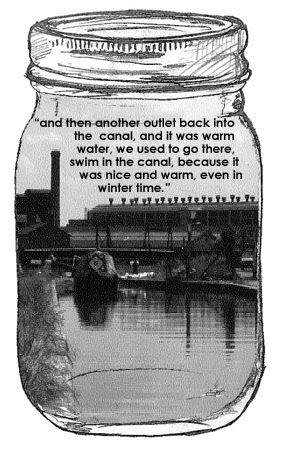
Each jam jar contains a memory and photograph collected from along the Tame.


Tuesday, 5 November 2013

Witton Half Term Trail

Thank you to everyone who took part in the Witton Trail this half term, I have collected the trails and will announce the winner soon.
Lots of jam jars full of Witton and River Tame wildlife (including Witton's industrial wildlife, like cars, bikes, cogs and engines) were placed round the streets over half term. Those that took part in the trail followed the clues on their sheets and could discover what the area used to be like, some hidden places in the present, and produce some ideas for what they would like to see happening in the area in the future.
A map was provided with the trail to help people find their way round.


A little more information about parts of the trail.

Why is there a horse in Witton?

Well, horses used to pull carts, you can see some pictures of horses pulling the milk carts in Tame Road here. But, as well as the carts, horses used to pull the canal boats along the canal, as you can see below; the trail took you the part of the canal in the photo, along the Deykin Avenue cul-de-sac, and the house on the right is still there. It used to be the house for the toll keeper, who collected money from those using the canal.
There was also a cow along the trail, where Witton Farm used to be; now this is part of DANA. Near to DANA those on the trail found out where children, who are now in their 90s, used to pick blackberries in the autumn, and the noises that all the metal manufactories used to make.


PRESENT WITTON


 Gears

Around Electric Avenue and Tame Road there were lots of clues about all of Witton's industry; WILD makes parts which can be found in most people's cars, plus bikes, engines and all sorts of other things are still made in the area. Many of Witton's items travel all across the country and to the rest of the world, like Germany, Turkey, Pakistan, India, Brazil, China and many other places.

FUTURE WITTON

There were some great drawings produced for how Witton could be added to, and how some of the empty buildings and spaces could be used.

I will add these to some separate posts as they were so good.

Thursday, 6 June 2013

All That's Left of Kynoch's and IMI


Whilst walking down Wellhead Lane on Tuesday I came across this tumble-down building and wondered what it could have been, but on a tour of Witton and Aston by an Aston resident (Dave, who has been a really great help with sharing his memories) I found out that this was the rear entrance of Kynoch's. Everyone who remembers Kynoch's tells me that the site was like a town in itself; there was a power station, dentists, doctors, vehicles that never left the site, and each building had bikes to get around because it was so vast. I will put some maps up to show how massive the site was, but for now I will just say that it was big- really, really big.

It seems so strange then that it has all gone, and until I found this building I thought that it had completely disappeared; so this ragged, peeling building is all that is left of what was a company that was world renowned, and supplied the world with its multitude of goods. It seems a shame then, that it is just being left for nature to slowly creep up and help it to finally be unsaveable. So I thought I would take some photographs of the state it can be found in today, with many of the traces of its industrial use, which have a charm of their own. There are more photographs to come.

Monday, 20 May 2013

Made in Witton #3


This wonderful 1950s film (click above to see the film) describes how the 'lightning zip fasteners' were produced and tested in Witton, a real novelty of the day. If only skirts still could be transformed into capes! Why didn't that catch on?!?


Another British Pathe video of Witton is below. In 1967 the Witton Isolation Hospital was burnt down by the authorities to halt the smallpox that had been spreading.

HOSPITAL BURNT DOWN


If anyone has any memories of working in Kynoch's, the burning of the hospital, or any other events in Witton or Perry Barr, that they would like to share with the project, please let us know.
Contact Jenni jenni.colesharris@gmail.com

Made in Witton #2


Kynoch's (later ICI and IMI) was a huge part of Witton, in regards to its size, the amount of people it employed and its industrial output. It began making ammunition in the 1860s, but grew and diversified over the decades producing bikes and motorbikes, zips, engines, paper, metal products, lamps, and the list goes on. The video above shows a portable gas engine working that was made in Witton, and below is a trade image of a similar oil engine from 1904.


If anyone has any memories of working in Kynoch's, or any other places/events in Witton or Perry Barr, that they would like to share with the project, please let us know.
Contact Jenni jenni.colesharris@gmail.com

Thursday, 2 May 2013

Tufnol's


I've been finding out about Tufnol's for the last couple of days, who have been in Perry Barr since 1916, originally as George Ellison's (see photo above). In 1926 Ellison's produced and patented Tufnol (tough phenol), used today in making a number of objects including circuit boards, pool balls, bakelite and adhesives. One use is in the making of epoxy resin, which Tufnol's (which still exist on Wellhead Lane in Perry Barr) produce; I have used this resin in making jewellery and art work as it encases objects in a clear, solid block. It made me think that it would be great if the artists working in the Witton and Perry Barr areas over the next year might think about using locally produced materials for their work, and number one on the list can be Tufnol's epoxy resin. If anyone can think of any other locally produced items that could be used in such a way, please leave your comments or get in touch.


Scrabble letters cast in resin.
You can find some more great images about resin casting here.
The history of Tufnol's can be found here.
Tufnol's current day website is here.
Thanks to Viv to telling me about this company.